Perceived on a planetary scale as natural and good, as indispensable as it is endangered, water is becoming the reassuring symbol of the quality of life and of our successful harnessing of nature. But at the same time, included in its image is all the formidable restlessness needed for a future as astonishing as it is uncertain.1
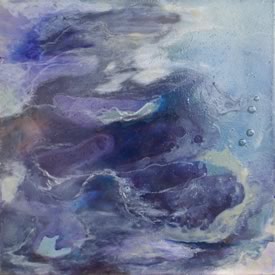
Oceans, lakes and rivers cover two-thirds of our planet, yet only .007 percent of it is usable by humans in its natural state. Seventy-six percent of the world’s population lacks an adequate water supply and half of humanity has no sanitation. In the west particularly, vast quantities of fresh water are consumed and wasted every day. Water is essential for all life, yet so often taken for granted. Today we are starting to come to terms with the fact that we are depleting our resources. In this regard, the focus in art has changed from a Romantic idealization of the landscape to a closer examination of what human beings have done to the environment, focusing on our relationship with nature. My own paintings have developed into detailed surface images that deal with both the conceptual and physical properties of water. They represent a skin that separates the area between air and water, and the ability of water to reflect, mimic and disguise or camouflage that in it or around it. Through painting I examine the details of the water’s surface and by physically creating some of the works with my fingers, attempt to capture some of water’s sensuous personality. The works derive from personal experiences in and on water, thoughts and feelings about water and images of water. I should like to think that they in turn might give the spectator pause for thoughts of their own concerning their relationship with the natural world.
Kendra Zink
1 Fischesser, Bernard and Dupis -Tate, Marie-France, Water, Thames & Hudson, London 2001, p. 139